How NiyukuriLab came to be.
A running record of the people and milestones that shaped the group.
Biography of David Niyukuri
Dr David Niyukuri is the Coordinator of the Interdisciplinary Research Program in Public Health at the Doctoral School of the University of Burundi, and an Associate Professor in the Department of Mathematics and the Institute of Applied Statistics at the University of Burundi. He holds academic training in mathematics and epidemiology from the University of Burundi and Stellenbosch University.
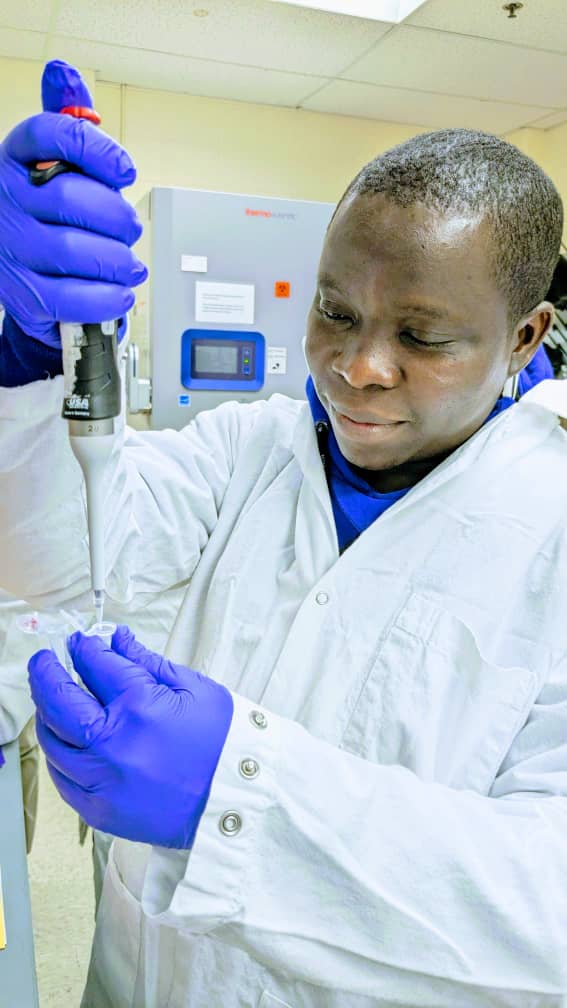
His research focuses on mathematical modeling of infectious disease transmission dynamics. He leads a multidisciplinary research group conducting epidemiological studies on malaria, Mpox, and other infectious diseases, in collaboration with international institutions including the University of Notre Dame (USA), Kenya Medical Research Institute (KEMRI), the National Institute of Public Health in Burundi, the African Institute for Mathematical Sciences Research Centre and Innovation (AIMS-RIC), Imperial College London, and the National University of Singapore. These partnerships enhance methodological development, provide access to advanced laboratory and computational resources, and support student supervision.
Dr Niyukuri is currently an Iso Lomso Fellow at the Stellenbosch Institute for Advanced Study (STIAS) in South Africa and the Wiko Institute for Advanced Study in Berlin, Germany. His current research explores the biomolecular dynamics of malaria parasites and vectors through multiscale and agent-based modeling (ABM), with a particular interest in simulating disease transmission and pathogen mutations across networks.
For his doctoral research, he developed an integrated simulation framework combining sexual behavior survey data, phylodynamics, and agent-based modeling to support HIV prevention strategies.
Between 2019 and 2023, Dr Niyukuri contributed to the World Health Organization (WHO) Emergencies Program in both the African Region and at Headquarters, where he was involved in public health intelligence and outbreak response for Ebola, COVID-19, and other health emergencies.